


ISO Certification in Saudi Arabia (2026 Complete Guide)
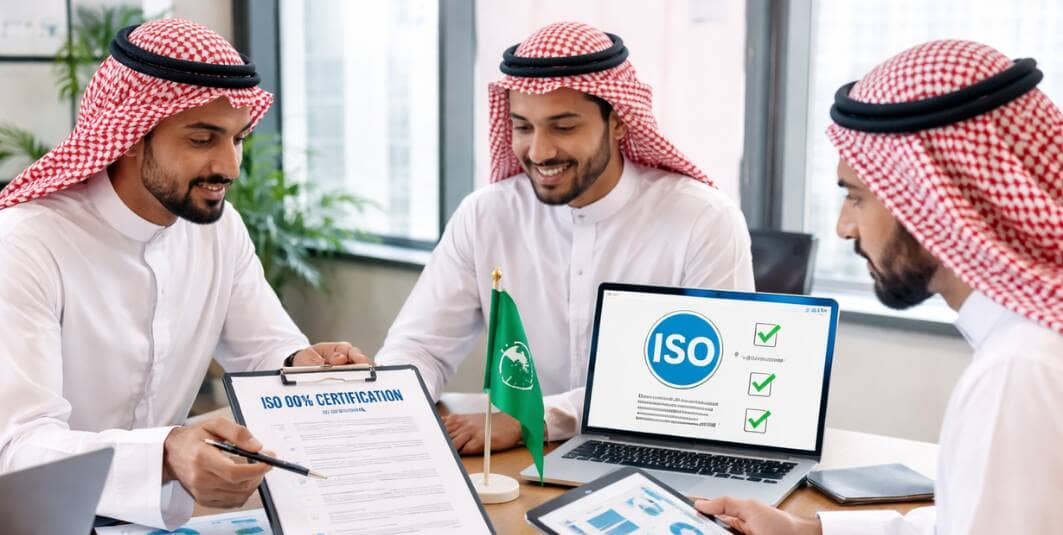
If you are looking to obtain ISO certification in Saudi Arabia, this guide will explain everything you need to know — requirements, process, cost factors, accredited certification bodies, and how to choose the right ISO consultant.
ISO certification has become a strategic requirement for companies in Saudi Arabia, especially with Vision 2030 driving quality, compliance, and operational excellence across industries.
Whether you are a startup, SME, contractor, manufacturer, or service provider, ISO certification can strengthen your credibility and help you win government and private tenders.
What Is ISO Certification?
ISO certification is an official recognition issued by an accredited third-party certification body confirming that your organization complies with a specific ISO management system standard.
Common ISO standards in Saudi Arabia include:
-
ISO 9001 – Quality Management System (QMS)
-
ISO 14001 – Environmental Management System (EMS)
-
ISO 45001 – Occupational Health & Safety Management System
-
ISO 22000 – Food Safety Management System
-
ISO 27001 – Information Security Management System
- ISO 22301 – Business continuity Management System
It is important to clarify that the International Organization for Standardization (ISO) develops standards but does not issue certificates. Certification is granted by accredited certification bodies after a successful audit.
Why ISO Certification Is Important in Saudi Arabia
ISO certification is often required for:
-
Government tenders and public projects
-
Aramco & major contractor approvals
-
Construction and engineering contracts
-
Manufacturing and industrial licensing
-
Export and international trade
Benefits include:
-
Increased competitiveness
-
Improved operational efficiency
-
Stronger risk management
-
Better documentation and control
-
Enhanced customer confidence
For many sectors in Saudi Arabia, ISO certification is no longer optional — it is expected.
ISO Certification Process in Saudi Arabia
Here is the practical step-by-step process:
1️⃣ Gap Analysis
Review your current management system against ISO requirements.
2️⃣ Documentation & Implementation
Develop policies, procedures, risk assessments, records, and operational controls according to the chosen standard.
3️⃣ Training & Awareness
Train employees to understand their roles within the management system.
4️⃣ Internal Audit
Conduct an internal audit to verify compliance before certification.
5️⃣ Certification Audit (Stage 1 & Stage 2)
An accredited certification body performs an external audit.
6️⃣ Certification Issuance
If compliant, your company receives an ISO certificate valid for 3 years, with annual surveillance audits.
How Long Does ISO Certification Take in Saudi Arabia?
Typical timeframe:
-
Small companies: 1–3 months
-
Medium companies: 2–4 months
-
Large / multi-site companies: 3–6 months
The timeline depends on company size, complexity, and readiness.
ISO Certification Cost in Saudi Arabia
ISO certification price in Saudi Arabia depends on:
-
Company size and number of employees
-
Number of locations
-
Type of ISO standard
-
Certification body fees
-
Consultant involvement
Instead of chasing the cheapest ISO certificate, companies should focus on:
-
Accreditation validity (IAF recognition)
-
Real implementation (not paper certification)
-
Long-term compliance
If you need a detailed breakdown of pricing, refer to our guide on ISO certification cost in Saudi Arabia.
If your organization is specifically looking for quality management compliance, you can explore our detailed guide on ISO 9001 certification in Saudi Arabia, including process, cost, and timeline.
ISO Certification Bodies in Saudi Arabia (How to Choose)
To obtain ISO certification in Saudi Arabia, companies must work with an accredited certification body that conducts the certification audit and issues the ISO certificate. Well-known certification bodies operating in the region include SGS, Bureau Veritas, TÜV Rheinland, DNV, and Intertek.
When choosing a certification body, organizations should verify accreditation, international recognition, and industry experience. It is also important to note that certification bodies only perform audits, while ISO consultants typically help companies prepare their management systems before certification.
For a full list of certification bodies operating in the market, see our guide:
List of ISO Certification Bodies in Saudi Arabia
🔹 ISO Certification in Riyadh
Riyadh is the main business hub of Saudi Arabia and home to government authorities, large corporations, and major contractors. ISO certification in Riyadh is often required for companies participating in public tenders, large infrastructure projects, and Vision 2030 initiatives.
Whether you operate in construction, manufacturing, IT, healthcare, or consulting, obtaining ISO certification in Riyadh strengthens your competitive position and demonstrates compliance with international standards. Our consultants support companies in Riyadh through the full certification process — from gap analysis and documentation to final audit and accredited certification.
🔹 ISO Certification in Jeddah
Jeddah is a key commercial and logistics center, especially for companies involved in trade, import/export, food industries, and marine services. ISO certification in Jeddah helps organizations improve operational efficiency and meet regulatory and client requirements.
Many companies in Jeddah pursue ISO 9001, ISO 22000, and ISO 45001 to enhance quality, safety, and credibility. We assist businesses in Jeddah with practical implementation, internal audits, and coordination with accredited certification bodies to ensure a smooth and cost-effective certification process.
🔹 ISO Certification in Dammam
Dammam and the Eastern Province are critical for oil & gas, industrial manufacturing, and energy-related sectors. ISO certification in Dammam is often a prerequisite for working with major industrial clients and approved vendor lists.
Organizations in Dammam benefit from ISO standards by improving risk management, compliance, and operational control. Our team provides structured support tailored to industrial environments in the Eastern Province, helping companies achieve internationally recognized certification efficiently and professionally.
Accredited ISO Certification Bodies in Saudi Arabia
Certification must be issued by an accredited body recognized by an accreditation authority (typically IAF member).
When selecting a certification body, check:
-
Accreditation status
-
Industry experience
-
Auditor competence
-
Reputation
-
Transparency of fees
Choosing the wrong body can lead to rejection in tenders or supplier approvals.
ISO Consultant vs Certification Body – What’s the Difference?
Many companies confuse these two roles:
ISO Consultant
-
Helps you build and implement the system
-
Prepares documentation
-
Conducts internal audits
-
Trains staff
Certification Body
-
Performs independent audit
-
Issues the certificate
A consultant cannot issue a certificate.
Cities We Support in Saudi Arabia
We provide ISO consultation and certification support across:
-
Riyadh
-
Jeddah
-
Dammam
-
Khobar
-
Mecca
-
Medina
-
Tabuk
-
Abha
-
Jazan
-
Al-Jouf
Both onsite and remote support options are available.
Why Work With an Experienced ISO Consultant?
Successful ISO certification is not about passing an audit once — it is about building a sustainable management system.
An experienced consultant ensures:
-
Practical implementation
-
Audit readiness
-
Risk-based thinking
-
Proper documentation control
-
Real operational improvement
Request ISO Certification Support
If your organization is planning to obtain ISO certification in Saudi Arabia, we can help you with:
-
Gap analysis
-
Full system implementation
-
Internal audit preparation
-
Certification body coordination
-
Ongoing compliance support
Contact us to receive a tailored proposal based on your company size and scope
Frequently asked questions
1️⃣ What are the main benefits of ISO certification for construction companies in Saudi Arabia?
ISO certification helps construction companies qualify for government tenders, major contractor approvals, and large infrastructure projects. It improves project management, risk control, documentation, and client confidence, which are critical in the Saudi construction sector.
2️⃣ Is ISO certification mandatory for companies operating in Saudi Arabia?
ISO certification is not legally mandatory in most sectors, but it is often required by clients, government entities, and major contractors as a pre-qualification condition.
3️⃣ Which ISO standards are most common in Saudi Arabia?
The most requested standards include ISO 9001 (Quality Management), ISO 14001 (Environmental Management), ISO 45001 (Occupational Health & Safety), and ISO 27001 (Information Security).
4️⃣ How long does it typically take to obtain ISO certification in Saudi Arabia?
The timeline depends on company size and readiness. For small to medium businesses, it may take 1–3 months. Larger organizations may require longer implementation and audit preparation.
5️⃣ Can a small company get ISO certified in KSA?
Yes. Small and medium-sized enterprises can obtain ISO certification if they implement a compliant management system. The process and cost are usually simpler compared to large organizations.
